Tuesday 121: A hopeful perspective
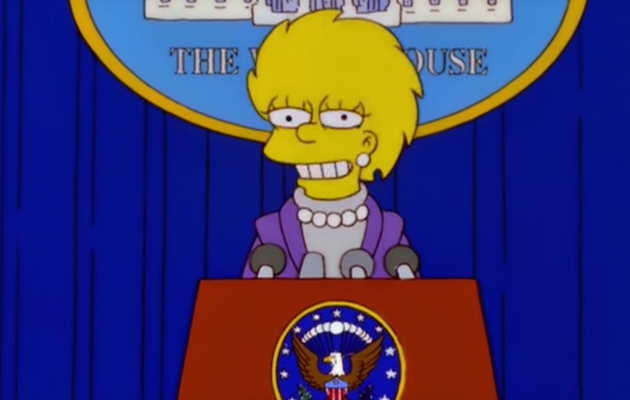
Every time I start writing something about the US election, I stop myself. More than enough has been said about it, and I don’t have anything to offer beyond emphasis; some analysis rings true to me, some is spurious, a depressing amount is delusional. It’s whatever.
I’ve tried to embrace Substack to get away from the Post Zone, not just find a new tunnel with different design to crawl down into. There’s a scene in Denis Johnson’s Tree of Smoke where a platoon of US infantrymen pour gasoline down a Vietcong tunnel and light it, causing a huge explosion that throws one of them several meters into the air (literal “blowback,” you may notice, heh heh). One of the men then crawls down to investigate the tunnel, and is dragged out by his feet a few moments later to report that the whole thing has collapsed about ten meters in. I think that’s a nice metaphor for the experience of using social media in 2024.
Thanks for reading Tuesday! Subscribe for free to receive new posts and support my work.
My personal politics temper my anger to some extent (more on that in a moment), but at the end of the day, I can’t even watch ESPN when Boston sports teams lose big games, so I don’t really have much of a stomach for which particular assholes are being appointed to which roles, which policies Donald Trump will probably tear up on his first day, and which he’ll implement by executive orders that will in turn be challenged in courts with rote obligation. The whole thing is very maddening, tiring, just one more embarrassing patch in the quilted jacket of American character to be explained away.
But to put the obvious aside, I want to offer a reason for hope. From the perspective of the authors of those aforementioned spurious/delusional election takes, I’m probably seen as a type of voter: A disillusioned, disaffected Democrat who at best feels no sense of enthusiasm for a candidate like Kamala Harris. The reality is more radical, more patriotic, and ultimately more hopeful. My journey to this point, at least, in my own political maturity, probably begins with September 11. I was in high school in 2001, and like a lot of people, I think this is roughly when I started becoming aware of shit. Consider for a moment the last 20+ years of lessons for a member of the electorate like me: I’ve known nothing, really, except obfuscation, disorder, instability, death, and inequality. The best of what I experienced, like the elections of Obama and AOC, maybe Warren’s creation of the CFPB, and of course the glimmer of progress in Bernie Sanders, has ended in summary disappointment. The worst of what I’ve experienced, I mean, Jesus, do I even have to go there?
So where does a person like me turn? What does a person like me believe in? Is it so hard to see that someone in my situation is not disillusioned with the Democratic party, but simply no longer sees the party as representing his interests, his morals, his beliefs, or his worldview? It’s not a matter of disaffection, disillusionment, or abandonment—the party as it exists today has simply chosen a direction other than the one I believe in.
This is the starting point: I can’t be mad at the Democrats for choosing the path they have. I think it’s foolish, and I don’t think the party can survive without evolving, but I don’t expect it to evolve at all, and if it does, I don’t expect it to move in a direction ideologically aligned with where I find myself. I’ve moved on.
Of course, the Republican party’s unconscionable embrace of nativism, racism, sexism, homophobia, and violence played a significant part in my political maturation, but it’s not without the Democrats’ tepid response (a VP debate in which Tim Walz and JD Vance basically agreed on every policy point raised is illustrative) that I find myself turning to anticapitalism.
And although anticapitalism is sort of the best way I can describe it ideologically, it’s emotionally, materially, something else. My politics today are collected from the outgrowth of mutual aid movements, protest movements, and solidarity movements. I believe that another way is possible, that inequality is not a certainty because capitalism is not the natural order of things—that we, as human beings in a society, make a lot of imprudent assumptions about the natural order of things. There’s a world where health, food, shelter, and kinship are human rights, and it isn’t that far away. While it’s easy to dismiss the possibility of a world without war, it’s also just as easy to trace the roots of most modern global conflict to imperial and colonial pursuits that are the direct result of insatiable capitalist growth. And capitalism, imperialism, colonialism, these things are choices.
I don’t have much faith that we’ll see this sort of major ideological shift away from market capitalism in my lifetime, but I think if we’re to survive as a species, and if our planet is going to survive in some recognizable form, we’ll have to get started. And maybe we won’t, but if we do, future generations will look back on this precipitous century and they won’t see the petty fascist tyrants or the feckless bourgeois gestures of liberalism, but the stirring of the masses of some truly brave, indefatigable people who stood together like brothers and sisters, against war, genocide, death, hate, and above all against the notion that the apparent future is irrevocable. It might be scary, and a lot of ordinary people might have to make some very real decisions about doing what’s right, but this is why I don’t feel despair at the second election of Donald Trump: because these times afford us the opportunity to stitch something new into the quilt of American character, something we can be really proud of.
In other news, I’m back following a brief break for travel and a half marathon. Readers can expect a poem later this week. Please share this blog if you like it; I’m working to grow my audience.