Tuesday 3.22: No Business
Watching a footrace is weird. It’s monotonous, but as it plays out, it’s impossible not to begin to feel the hypnotic human drama, to try to understand the micro-adjustments, to explicate the way you suppose a runner feels by the way he looks, to recognize when he has something, or when he doesn’t.
Billy Mills’ race at the 1964 Olympics has been written about ad nauseam. No other American has come as close to his success (Galen Rupp won silver in 2004), and I don’t think I’ve ever watched anyone pull off such a shocking upset, almost literally, out of nowhere. I’ve watched the final moments of the race over and over again; certain elements are seared into me.
One of the great things about watching sports is their ability to awe. If you’ve ever casually watched a few innings of a baseball game on television, you’ve probably not been struck, but if you’ve ever been to a game in person, close enough to see just how far it is across an infield, you know the nape-of-the-neck tingle of scale and context—the parameters of human capability newly delineated.
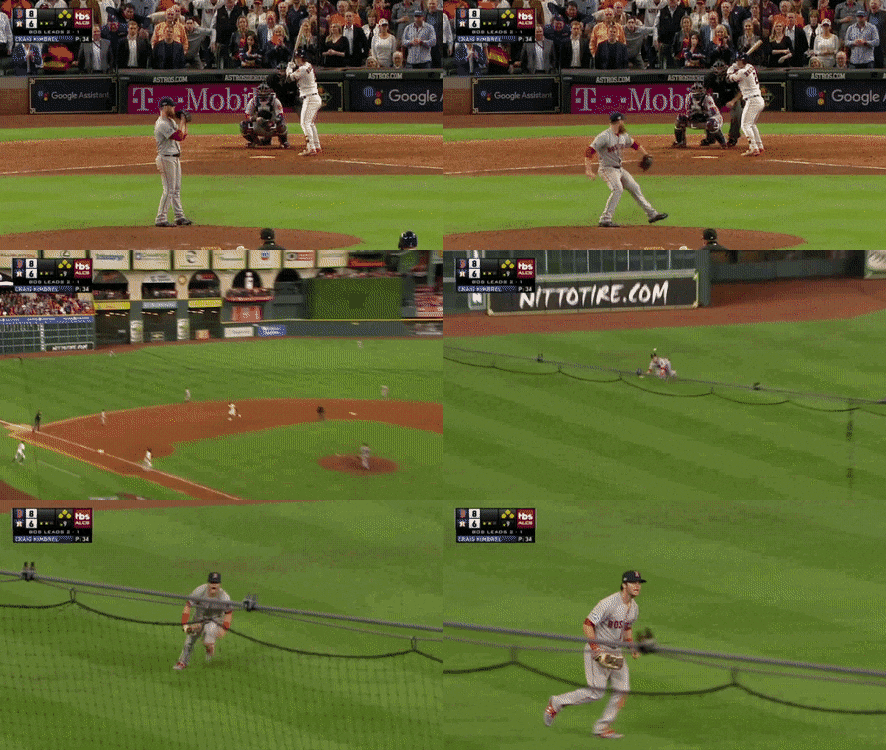
Writing about Roger Federer, David Foster Wallace described these moments of awe that only become more mind-blowing the more you watch sports because no matter how many miles you put on the spectation odometer, you’re going to keep seeing people do things you didn’t think were possible. You may experience something like this watching Lebron James dunk a basketball, Pedro Martinez strike out 5 of 6 all-star batters, Andrew Benintendi make the catch in the gif at the top of this post—every instance has the response: “He had no business…”
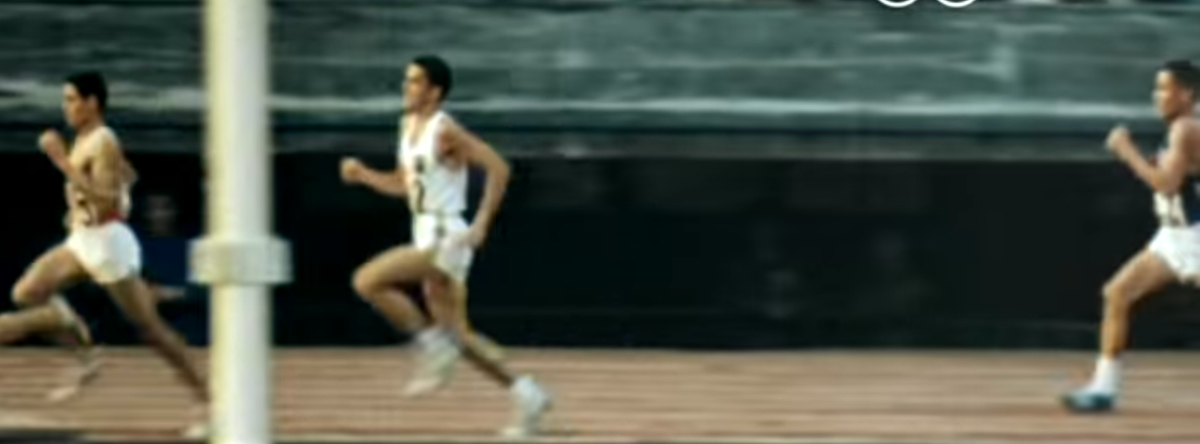
Benintendi had no business getting to that ball. Martinez had no business striking out those hitters. Billy Mills had no business making up this gap:
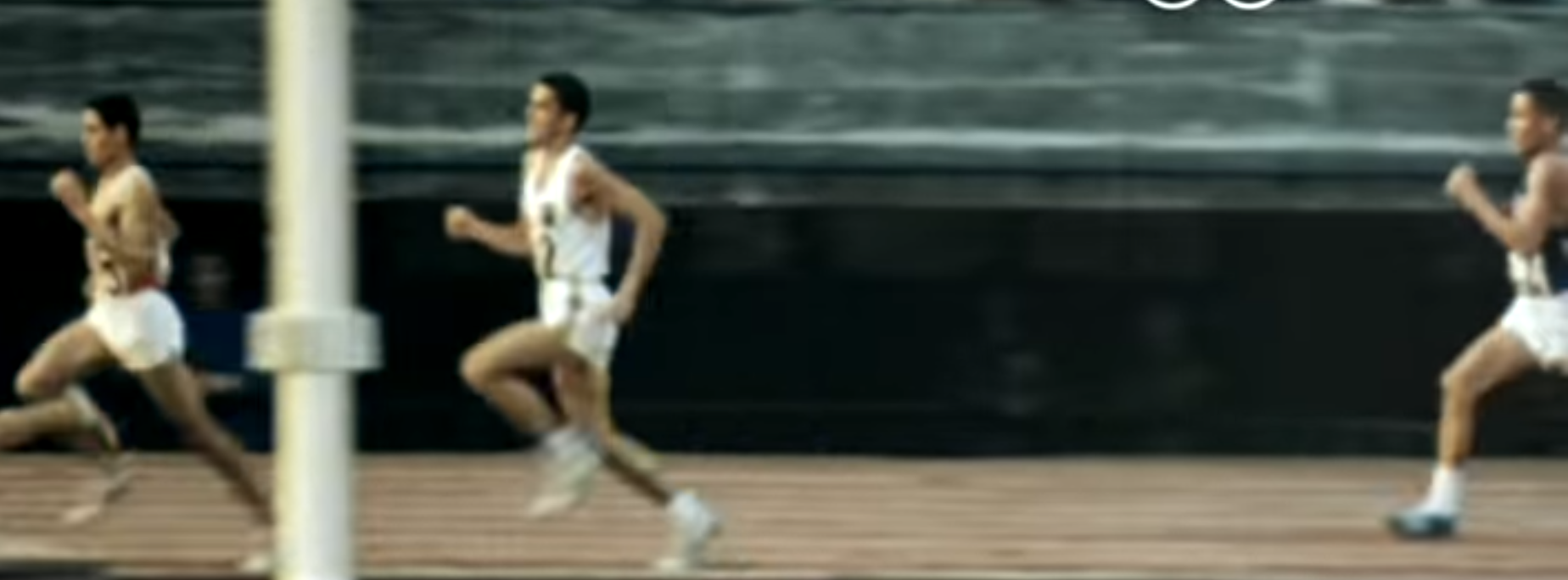
What you see there is Mohammed Gammoudi in first place, Ron Clarke (who at the time held the world record in this race) in second, and Billy Mills in third. Now, keep in mind, the two men at the front are the greatest runners in the world at this distance. Mills is relatively untested, an inexperienced 10K racer. In less than 15 seconds, this race will be over. That gap is an ocean. Billy Mills didn’t have any business winning this race. But he did.
A Oglala Lokota Indian, Billy Mills is also known as Tamakoce Te'Hila. His life and career in running are punctuated by experiences of racial prejudice, and he has been a tireless, instrumental advocate for American Indians for decades. He started running, in part, to escape the psychological stressors of poverty and hardship living on the Pine Ridge Reservation in South Dakota. (Brief aside while I have you here, if you happen to have some extra dollars, consider giving a few of them to Running Strong for American Indian Youth.)
Mill’s story of the race is unbelievably romantic. In just about every interview with him you can find, he describes the end the same way: On the final lap, he is in the lead group. Chasing Clarke, he recalls that Ron looked over his shoulder, and Mills thought, “He’s worried.” Mills took the opportunity to briefly took the lead, checking whether Clarke and Gammoudi would match his final 400 pace. Clarke passed him on the inside and bumped him, nearly knocking him over, and Gammoudi used the tangle to slip into the lead. Having re-caught his stride (pretty remarkably, to be honest), Mills says he began to have an evolving thought:
I can win. I can win. I’m going to win. I’m going to win. I’ve won. I’ve won. Whether or not I cross the line first, I have won.
He did win. But that final thought has always stuck with me. It means many things, and is a critical element of the beauty and complexity of sport: Whether or not he finished first, Billy Mills had won the race.
When I was in my early 20s, I was in a bar eating brunch with a group of people, and for whatever reason, the fact that I liked sports became a topic of discussion. No one else had any interest, or so they all said (you say lots of things in bars in your 20s), and my enthusiasm was a sort of curiosity. I remember someone asked, “Do you like the sport, or the culture of the sport?” I wasn’t sure how to respond. I wasn’t certain of the difference. To me, saying “I don’t watch sports” was the equivalent of saying, “I don’t listen to music.” Sport for me is an just essential element of being a person. It’s difficult for me to understand the perspective of a person who has not ever felt the enchanting desire to have won the race, whether that means crossing the line first or not.
When Billy Mills won the 10,000 meter race at the Tokyo games in 1964, NBC color announcer Dick Bank was famously fired for his on-air exuberance. He makes a noise, as pure and beautiful as can be made, because he’s seen freedom. It kind of sounds like a war cry.
Look, nobody knows why we’re here. It’s probable that there isn’t a reason. Humor me, for one minute, and look at Mills.
Look at Mills! Look At Mills!